Can You Drink Water Before Fasting Blood Work? What to Know Before Lab Tests
You have routine blood work scheduled in the morning and were told to fast beforehand. Then the questions start: Can you drink water? What about coffee? Do you really need to go 12 hours without eating? What if you also need to provide a urine sample?
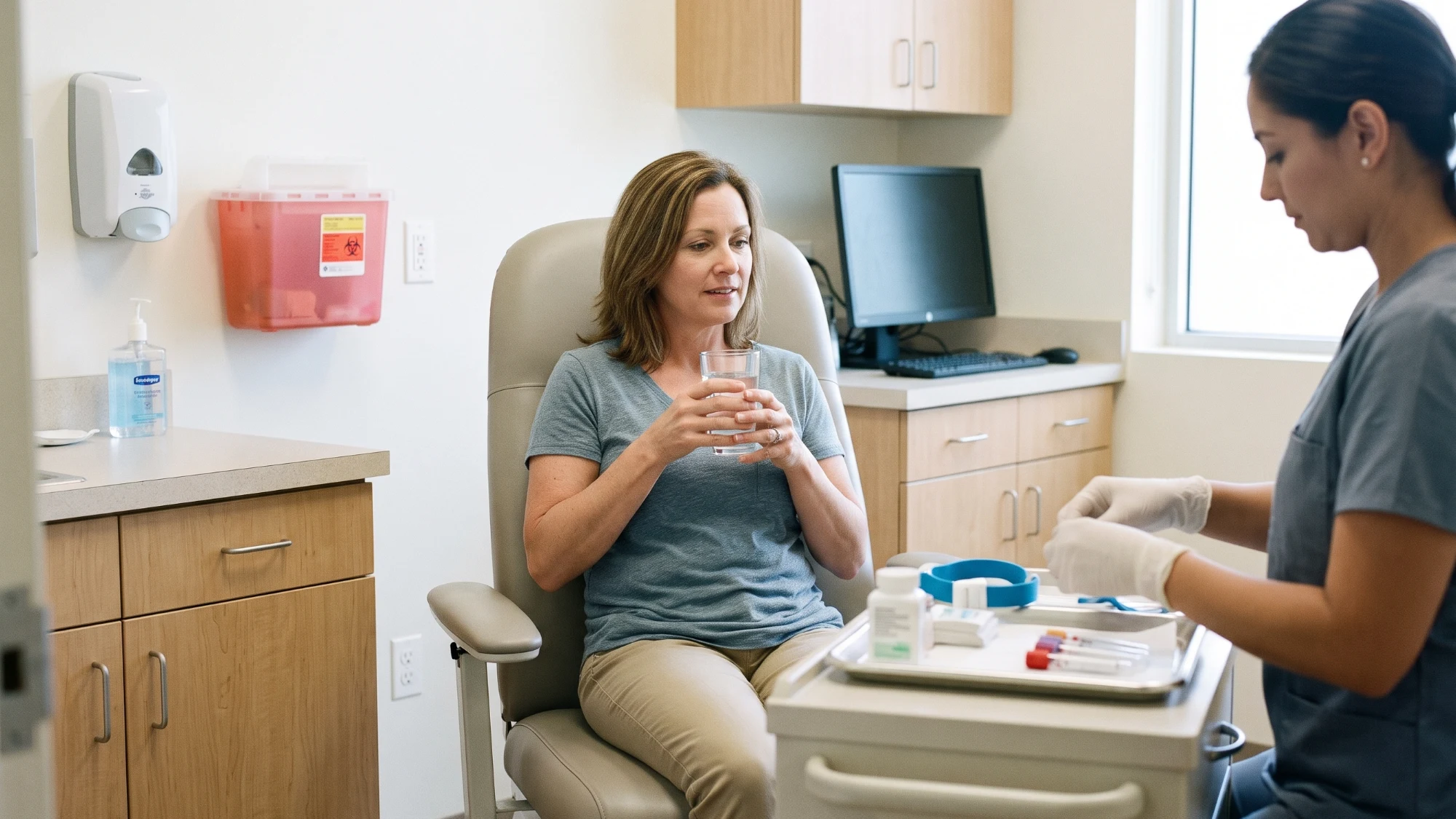
For most fasting blood tests, plain water is allowed and often encouraged unless your healthcare provider or laboratory gives you different instructions.
Water does not contain the sugars, fats, proteins, or calories that can interfere with certain laboratory measurements. Staying hydrated can also make your veins easier to access when it is time for the blood draw.
The more important question is whether your particular tests actually require fasting in the first place.
What Does Fasting for Blood Work Mean?
If you are told to fast before a blood test, it generally means you should not eat or drink anything except plain water for a specific number of hours before the test.
Food and beverages can temporarily change levels of substances circulating in your blood, including glucose and fats. For certain tests, that can make the results harder to interpret accurately.
Fasting instructions may also include avoiding gum, smoking, and exercise during the fasting period.
Not every laboratory test requires fasting, so do not assume you need to fast simply because blood is being drawn.
Can You Drink Water While Fasting for Blood Work?
Usually, yes.
Plain water is generally permitted during fasting blood work.
In fact, being adequately hydrated can make the blood draw easier because hydration helps keep more fluid in your veins.
Stick with plain water unless your instructions specifically say otherwise.
Avoid adding:
- Lemon or lime
- Sugar
- Sweeteners
- Flavoring packets
- Electrolyte mixes
- Other additives
Even low-calorie or sugar-free beverages may contain ingredients that could affect certain tests.
If your lab instructions tell you not to drink anything at all, follow those specific instructions.
How Long Should You Fast Before Blood Work?
For many fasting blood tests, the typical fasting period is about 8 to 12 hours.
The exact amount of time depends on what your healthcare provider ordered.
That is one reason morning appointments are often convenient. If your blood draw is scheduled early, much of the fasting period happens while you are sleeping.
For example, if you are instructed to fast for 10 hours before an 8 a.m. appointment, you may finish eating around 10 p.m. the night before and then drink only plain water until the test.
There is usually no benefit to fasting longer than instructed. Fasting unnecessarily may also affect certain results, so follow the timeframe you were given rather than assuming a longer fast is better.
Which Blood Tests May Require Fasting?
Whether you need to fast depends on the specific tests being ordered.
Tests that may require fasting include:
Fasting Blood Glucose
A fasting glucose test measures your blood sugar after a period without food. It may be used when screening for or monitoring diabetes or prediabetes.
A fasting glucose test generally requires at least eight hours without food, although other types of glucose testing do not require fasting.
Cholesterol and Lipid Testing
A lipid panel measures substances such as cholesterol and triglycerides.
Some lipid tests are performed after fasting, while others may not require it. The decision can depend on what your healthcare provider is trying to evaluate and your previous results.
Metabolic Panels
A basic metabolic panel or comprehensive metabolic panel measures several substances in the blood, which may include glucose, electrolytes, and markers related to kidney or liver function.
Depending on what is ordered and why, your provider may ask you to fast.
The important point is that the name of the blood test alone does not always tell you whether fasting is required.
Follow the instructions connected to your specific lab order.
Do All Routine or Annual Blood Tests Require Fasting?
No.
Having blood drawn as part of an annual physical does not automatically mean you need to fast.
Routine lab work varies based on:
- Age
- Medical history
- Previous lab results
- Medications
- Family history
- Blood pressure
- Diabetes risk
- Cardiovascular risk
- Other medical conditions
Your provider may order several tests at the same time, and only some may be affected by food.
If you are unsure, ask before your appointment rather than fasting unnecessarily.
Can You Drink Coffee Before Fasting Blood Work?
Usually, no, you cannot drink coffee before a fasting lab.
If you have been instructed to fast, stick with plain water unless your healthcare provider specifically tells you that another beverage is acceptable.
That includes black coffee.
Even without cream or sugar, coffee contains caffeine and other compounds that may affect certain laboratory measurements. it is recommended to avoid coffee during a fasting blood test and drink plain water instead.
The same general rule applies to:
- Tea
- Juice
- Soda
- Energy drinks
- Sports drinks
- Flavored water
If you need your morning coffee, the simplest option is usually to schedule fasting labs early and have it after the blood draw.
Can You Take Your Medications Before Fasting Labs?
This depends on the medication and the tests being performed.
Do not stop prescription medication simply because you have fasting blood work scheduled.
Some medications may affect certain test results, while others should continue to be taken normally. Vitamins and supplements can matter as well.
Before your appointment, ask whether you should take your usual:
- Prescription medications
- Over-the-counter medications
- Vitamins
- Supplements
This is particularly important if you take medications for diabetes or another condition in which skipping food could affect your health.
Your healthcare provider can give you instructions based on your specific medication schedule and laboratory tests.
What If You Accidentally Eat Before a Fasting Blood Test?
Tell the laboratory staff or healthcare provider.
Do not try to hide the fact that you ate or drank something other than water.
Depending on the tests being performed and what you consumed, your provider may still proceed with the blood draw or may recommend rescheduling it.
Eating before a fasting test can change certain results and make them less useful. In some cases, repeating the test later may provide more accurate information.
Do You Need to Fast for a Urine Test?
Usually not for a routine urinalysis.
Most urine tests do not require fasting. Your healthcare provider may instead give instructions about how and when to collect the sample.
For example, you may be asked to provide a clean-catch urine sample or, in certain situations, your first urine of the morning.
If you do not think you will be able to provide a sample, drinking some water may help. However, drinking an excessive amount of water immediately before a urine test can dilute the sample and may affect the results.
If blood work and a urine test are being done at the same appointment, follow the fasting instructions for the blood test while also following any separate instructions for the urine sample.
What About Blood Work and a Urine Test at the Same Annual Physical?
This is a common situation.
Your provider may order routine blood tests and a urinalysis during the same preventive visit, but the preparation requirements are not necessarily the same.
If your blood work requires fasting, you may usually continue drinking plain water.
That can actually be helpful if you also need to provide a urine sample, as long as you do not suddenly drink an excessive amount right before the test.
When scheduling the appointment, ask:
- Do any of my blood tests require fasting?
- How many hours should I fast?
- Can I drink plain water?
- Should I take my usual medications?
- Do I need to provide a urine sample?
- Are there any special collection instructions?
Those few questions can prevent having to repeat a test because of unclear preparation instructions.
Should You Exercise Before Fasting Blood Work?
If you have been instructed to fast, strenuous exercise before the test is generally best avoided unless your healthcare provider says otherwise.
Exercise can temporarily affect several measurements in the blood.
MedlinePlus includes exercise among the activities to avoid during a fasting period.
A normal walk to your appointment is different from doing a hard workout before having blood drawn.
If you have specific exercise restrictions related to your test, your provider should include them in your preparation instructions.
What Should You Do the Night Before Routine Lab Work?
Preparation is usually straightforward.
If fasting is required:
- Finish eating at the time specified by your healthcare provider
- Drink plain water as needed
- Avoid coffee, tea, juice, and other beverages during the fast
- Follow your medication instructions
- Avoid strenuous exercise if instructed
- Bring your lab order or identification if required
If you tend to feel lightheaded after fasting blood work, consider bringing a snack to eat once the blood draw is finished.
Most people can return to normal eating and drinking immediately afterward.
What If You Were Never Told Whether to Fast?
Do not guess.
Contact the healthcare provider who ordered the labs or the laboratory performing the test.
Fasting when you do not need to can be inconvenient and may even affect certain results. Eating when fasting was required can also make some results less accurate.
A quick question before the appointment is easier than repeating the blood work later.
The Bottom Line: Can You Drink Water Before Fasting Blood Work?
For most fasting blood tests, yes, you can drink plain water.
Many fasting tests require approximately 8 to 12 hours without food or beverages other than water, but the exact instructions depend on what your healthcare provider ordered.
Do not assume every annual blood test requires fasting. Do not substitute coffee, tea, flavored water, or other drinks for plain water. And do not stop prescribed medications unless your healthcare provider specifically tells you to.
BASS Medical Group primary care providers can help determine which preventive screenings and laboratory tests are appropriate based on your age, health history, medications, and individual risk factors.
If you are due for a routine checkup or have questions about blood work, schedule an appointment with a BASS Medical Group primary care provider.
Frequently Asked Questions
Can you drink water before fasting blood work?
Yes, plain water is usually allowed during a fasting blood test unless your healthcare provider or laboratory gives you different instructions. Staying hydrated may also make it easier to draw blood.
How long should you fast before blood work?
Many fasting blood tests require approximately 8 to 12 hours without food or drinks other than plain water. The exact fasting period depends on the tests ordered, so follow your provider's instructions.
Can you drink black coffee before fasting blood work?
Usually, no. If you have been instructed to fast, plain water is generally the safest beverage. Even black coffee contains caffeine and other substances that may affect certain test results.
Do you have to fast for a urine test?
Routine urinalysis usually does not require fasting. However, your provider may give specific instructions about when or how to collect the sample. Avoid drinking excessive amounts of water immediately beforehand because it may dilute the urine.