Enlarged Prostate Treatment: How HoLEP Laser Surgery Can Relieve BPH Symptoms
HoLEP, or Holmium Laser Enucleation of the Prostate, is a minimally invasive laser procedure used to treat urinary symptoms caused by benign prostatic hyperplasia, commonly known as an enlarged prostate.
During the procedure, a urologist removes prostate tissue that is blocking urine flow. HoLEP is performed through the urethra, so it does not require external incisions.
BASS Medical Group urologists offer HoLEP for appropriate patients with BPH. One of our urologists, Dr. Shu Pan, has performed more than 100 HoLEP procedures using MOSES laser technology.
HoLEP may be considered when medications or other treatments no longer provide enough relief, particularly for patients with moderate to severe symptoms or significantly enlarged prostates.
What Is Benign Prostatic Hyperplasia?
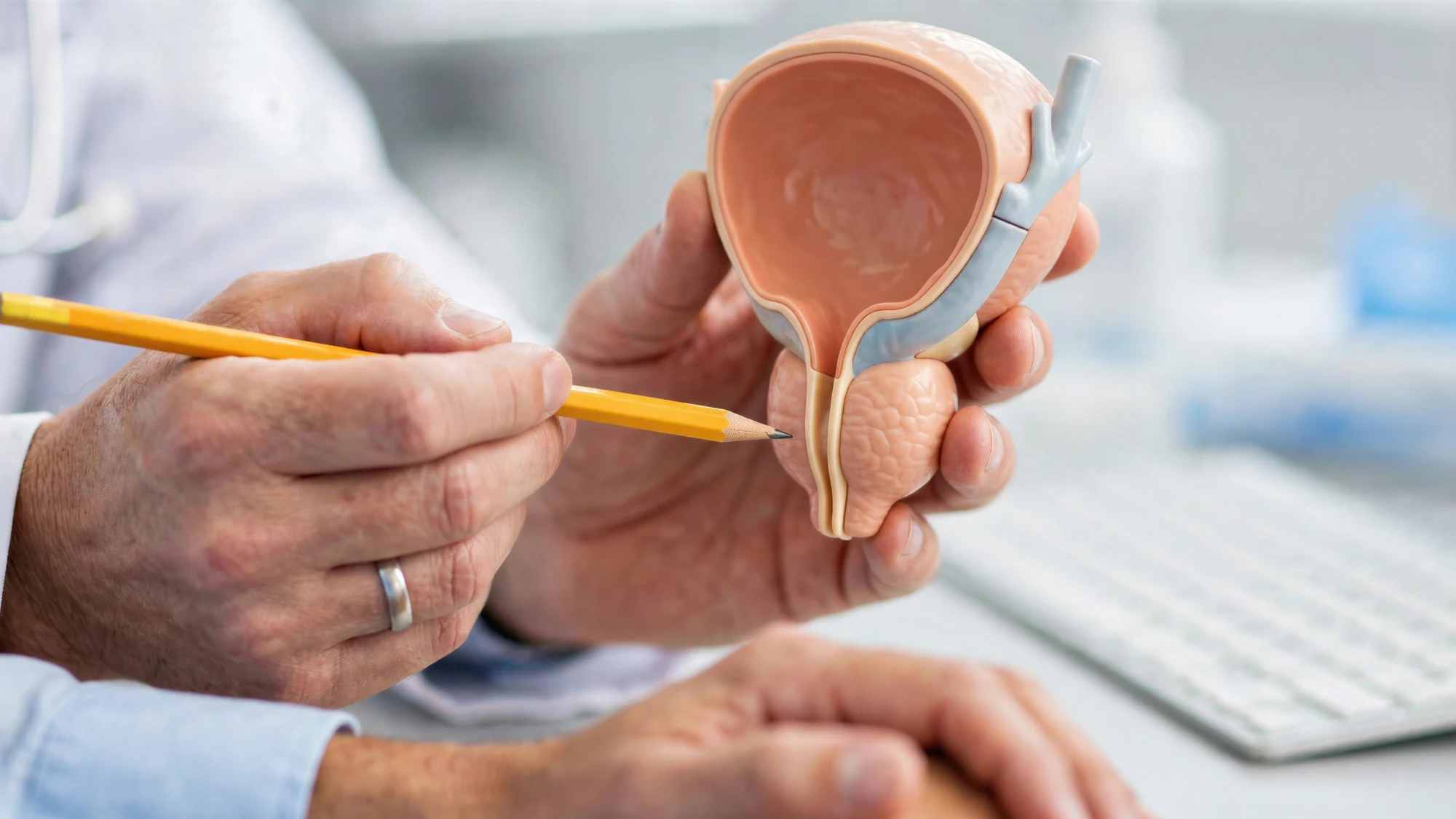
Benign prostatic hyperplasia, or BPH, is a noncancerous enlargement of the prostate that becomes more common with age.
As the prostate grows, it can press against the urethra, the tube that carries urine out of the body. This pressure may restrict urine flow and cause uncomfortable or disruptive urinary symptoms.
Common signs of an enlarged prostate include:
- Difficulty starting urination
- A weak or interrupted urine stream
- Frequent or urgent urination
- Waking up several times at night to urinate
- Feeling that the bladder has not emptied completely
- Urinary leakage
- Inability to urinate
Not everyone with BPH needs surgery. Some patients manage their symptoms with medication, lifestyle changes, or other minimally invasive treatments. A urologist may recommend surgery when symptoms become severe or increase the risk of complications.
What Is HoLEP?
HoLEP is a type of laser prostate surgery that removes tissue obstructing the flow of urine.
During the procedure, the surgeon inserts a thin surgical instrument through the urethra. A holmium laser separates the enlarged prostate tissue from the surrounding prostate. The removed tissue is then divided into smaller pieces and taken out through the bladder.
Because the procedure is performed entirely through the urethra, HoLEP does not require cuts in the skin.
The removed prostate tissue may also be sent to a laboratory for examination.
What Is MOSES HoLEP?
MOSES HoLEP refers to HoLEP performed using MOSES Technology, an advanced laser pulse-delivery system.
HoLEP describes the surgical technique. MOSES Technology changes how laser energy is delivered during the procedure. The system is designed to support efficient removal of prostate tissue, precise laser control, and bleeding management.
The technology does not change the condition being treated. Patients still need a urologic evaluation to determine whether HoLEP is appropriate for their symptoms and prostate size.
What Symptoms Can HoLEP Treat?
HoLEP may help relieve urinary symptoms caused by an enlarged prostate, including:
- Slow or weak urine flow
- Difficulty beginning urination
- A urine stream that starts and stops
- Frequent urination
- Sudden urinary urgency
- Nighttime urination
- Incomplete bladder emptying
- Urinary retention
It may also be considered for patients who develop complications related to BPH, such as recurring urinary tract infections, bladder stones, or persistent difficulty emptying the bladder.
What Are the Potential Benefits of HoLEP?
HoLEP can be used to treat prostates of many sizes, including significantly enlarged prostates.
Potential benefits may include:
- No external surgical incision
- Removal of a large amount of obstructing prostate tissue
- Treatment across a broad range of prostate sizes
- A short hospital stay for many patients
- Less bleeding than some traditional prostate procedures
- A lower likelihood of needing another procedure because of tissue regrowth
- The ability to send removed tissue for laboratory analysis
MOSES Technology may also support more efficient tissue removal and improved bleeding control during the procedure.
Individual results vary based on prostate size, urinary function, overall health, medications, and other factors. A urologist can explain how HoLEP compares with medications, TURP, and other BPH treatments.
What Happens Before HoLEP Surgery?
Before recommending HoLEP, a urologist will review your symptoms, medical history, medications, and previous treatments.
Your evaluation may include:
- A physical examination
- A prostate examination
- Urine testing
- Blood testing, including a PSA test
- Urinary flow testing
- A bladder scan
- Prostate imaging
- Cystoscopy
- Urodynamic testing
These tests help determine the size of the prostate, the severity of the blockage, and whether removing prostate tissue is likely to improve symptoms.
What Is Recovery Like After HoLEP?
Many patients return home the same day or after a short hospital stay. A temporary urinary catheter is usually placed after the procedure and is often removed within a short period.
Temporary symptoms during recovery may include:
- Burning during urination
- Blood in the urine
- Frequent urination
- Sudden urinary urgency
- Temporary urinary leakage
- Mild pelvic discomfort
Some symptoms improve quickly, while others may take several weeks or months as the bladder and urinary muscles adjust.
Patients are generally advised to avoid heavy lifting, strenuous exercise, and certain activities during the early recovery period. Recovery instructions vary, so patients should follow the guidance provided by their surgeon.
Are There Risks or Side Effects?
As with any surgical procedure, HoLEP has potential risks and side effects.
These may include:
- Temporary urinary leakage
- Urinary tract infection
- Bleeding
- Difficulty urinating after catheter removal
- Injury to the urinary tract
- Retrograde ejaculation
- Complications related to anesthesia
Retrograde ejaculation occurs when semen travels into the bladder instead of leaving through the penis. It does not usually prevent an erection, but it can affect fertility.
Your urologist should review the possible benefits, risks, side effects, and expected recovery before surgery.
Who May Be a Candidate for HoLEP?
HoLEP may be considered for patients who:
- Have moderate to severe BPH symptoms
- Have not improved enough with medication
- Have a significantly enlarged prostate
- Experience repeated urinary retention
- Develop bladder stones or recurring urinary infections
- Want to discuss a minimally invasive surgical treatment
HoLEP is not appropriate for every patient. The right treatment depends on prostate size, bladder function, medical history, medications, symptoms, and personal treatment goals.
Where Can You Get Treatment for an Enlarged Prostate in the East Bay?
BASS Medical Group urologists evaluate and treat enlarged prostate symptoms using a range of medical, minimally invasive, and surgical options.
For patients interested specifically in HoLEP, Shu Pan, MD, has performed more than 100 HoLEP procedures and can evaluate whether the procedure may be appropriate based on prostate size, symptoms, bladder function, and other factors.
HoLEP is only one treatment option for BPH. Depending on your needs, other procedures such as UroLift, Rezūm, or TURP may also be considered.
If you are interested in HoLEP, visit Dr. Shu Pan’s physician profile to learn more or schedule an evaluation.
If you are still comparing treatment options, read our guide to UroLift, Rezūm, TURP, and HoLEP to see how these procedures differ in recovery, symptom relief, prostate size considerations, and other tradeoffs.
BASS Medical Group Urology provides care at locations throughout the East Bay. Request an appointment today.
Frequently Asked Questions
Is HoLEP considered minimally invasive?
Yes. HoLEP is performed through the urethra and does not require external surgical incisions. A holmium laser is used to remove prostate tissue that is blocking urine flow.
What is the difference between HoLEP and MOSES HoLEP?
HoLEP is the surgical technique used to remove obstructing prostate tissue. MOSES HoLEP uses the same technique with MOSES laser pulse-delivery technology, which is designed to support efficient tissue removal and bleeding control.
Can HoLEP treat a very large prostate?
HoLEP can be used for prostates of many sizes, including significantly enlarged prostates. A urologist must evaluate each patient to determine whether HoLEP is the most appropriate treatment.
Does HoLEP require an overnight hospital stay?
Many patients return home the same day or after a short hospital stay. The length of stay depends on the procedure, recovery, bleeding, urinary function, and the surgeon’s recommendations.