UroLift vs. Rezūm vs. TURP vs. HoLEP: Comparing Enlarged Prostate Treatments
An enlarged prostate can make something as routine as going to the bathroom increasingly frustrating.
You may find yourself waking several times during the night, waiting for your urine stream to start, dealing with a weaker stream, or feeling as though your bladder never completely empties.
When medication is not providing enough relief, a urologist may recommend a procedure for benign prostatic hyperplasia, or BPH.
That is where the options can become confusing.
UroLift, Rezūm, TURP and HoLEP all treat urinary symptoms caused by an enlarged prostate, but they do not work the same way. Some may offer a quicker recovery and a lower likelihood of sexual side effects, while others remove more obstructing prostate tissue and may provide stronger or more durable relief.
There is no single procedure that is best for every enlarged prostate. The right choice depends on factors such as prostate size and anatomy, severity of symptoms, medical history, recovery preferences and treatment goals.
Why Does an Enlarged Prostate Make It Harder to Urinate?
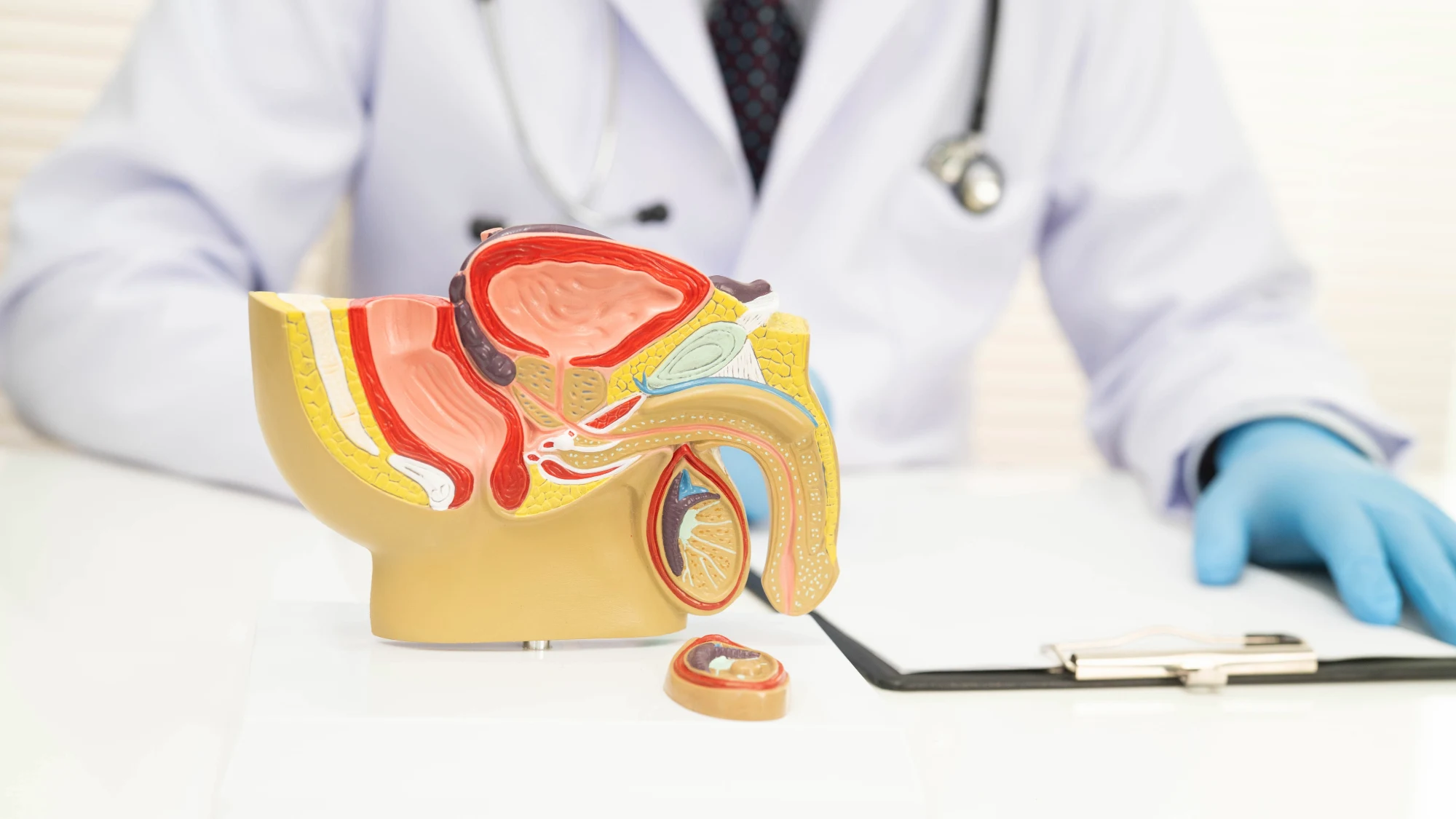
The prostate sits below the bladder and surrounds part of the urethra, the tube through which urine leaves the body.
With benign prostatic hyperplasia, prostate tissue grows and can begin squeezing or obstructing the urethra.
This can lead to symptoms such as:
- A weak or interrupted urine stream
- Difficulty starting urination
- Frequent or urgent urination
- Waking frequently at night to urinate
- Dribbling after urination
- Feeling that the bladder has not completely emptied
BPH is not prostate cancer, but symptoms can become significant enough to affect sleep and quality of life. Treatment may range from monitoring and medication to minimally invasive procedures and surgery.
When Is a BPH Procedure Considered?
Not everyone with an enlarged prostate needs a procedure.
Medication can provide good symptom relief for many people. A procedure may become worth considering when:
- Symptoms remain bothersome despite medication
- Medication causes unwanted side effects
- Someone prefers not to remain on medication long term
- Urinary retention or significant obstruction develops
- Recurrent UTIs or bladder stones occur
- Symptoms substantially interfere with sleep or daily life
Before recommending a procedure, a urologist may evaluate prostate size, urinary flow, bladder emptying and prostate anatomy.
Even if you do not expect to need a procedure, persistent urinary symptoms are still worth evaluating because similar symptoms can also be caused by other urinary or prostate conditions.
UroLift: Opening the Urinary Channel Without Removing Tissue
UroLift, also known as a prostatic urethral lift, takes a mechanical approach.
Instead of cutting, heating or removing prostate tissue, small permanent implants are placed through the urethra. The implants pull enlarged prostate tissue away from the urethra, creating a wider channel for urine to pass through.
Because no prostate tissue is removed, UroLift is considered a minimally invasive treatment.
Potential advantages include:
- Outpatient treatment
- Relatively quick recovery
- No surgical incision
- Lower risk of sexual side effects compared with procedures that remove prostate tissue
Many patients return to normal daily activities within several days, although urinary irritation, urgency or discomfort can occur temporarily.
Who May Be a Good Candidate for UroLift?
Prostate anatomy and size are important.
AUA guidance has traditionally recommended prostatic urethral lift for appropriately selected prostates under about 80 grams, while also noting that symptom and urinary-flow improvements may be less pronounced than with TURP.
UroLift may appeal to someone who prioritizes a less invasive procedure and minimizing sexual side effects, while someone seeking more extensive removal of obstructing tissue may prefer another approach.
Rezūm: Using Water Vapor to Shrink Prostate Tissue
Rezūm is another minimally invasive BPH treatment, but it works differently from UroLift.
A urologist passes a device through the urethra and delivers small amounts of heated water vapor into targeted areas of enlarged prostate tissue. The treated tissue is gradually absorbed by the body, reducing pressure on the urethra.
Rezūm is typically performed as an outpatient procedure and does not require an incision.
Potential advantages include:
- Minimally invasive treatment
- No permanent prostate implant
- Lower likelihood of sexual side effects for many patients
- Relatively short procedure
Unlike UroLift, symptom improvement is not immediate because the treated tissue needs time to shrink. Some patients notice improvement within several weeks, while fuller improvement may take a few months. A temporary catheter is also commonly needed while swelling resolves.
Who May Be a Good Candidate for Rezūm?
AUA guidance has supported water-vapor thermal therapy for appropriately selected patients with prostate volumes generally below about 80 grams, particularly when minimizing sexual side effects is important.
The best way to determine whether Rezūm is appropriate is through a urologic evaluation rather than choosing a procedure based only on which one sounds least invasive.
TURP: A Long-Established Surgical Treatment for BPH
Transurethral resection of the prostate, or TURP, has been used for decades and remains an important surgical treatment for BPH.
During TURP, a surgeon passes an instrument called a resectoscope through the urethra. An electrical loop is used to cut away obstructing prostate tissue. There are no external incisions.
Because TURP physically removes tissue rather than simply moving or gradually shrinking it, symptom and urinary-flow improvements can be substantial.
Potential advantages include:
- Strong improvement in urinary flow
- Rapid symptom relief for many patients
- Long history of clinical use
- Effective treatment for moderate to severe obstruction
TURP generally requires more recovery than UroLift or Rezūm and typically involves anesthesia and catheterization. Some patients stay in the hospital overnight, although same-day discharge may be possible in selected cases.
What About Sexual Function After TURP?
TURP can cause retrograde ejaculation, or dry ejaculation, in which semen travels backward into the bladder during orgasm rather than leaving through the penis.
The sensation of orgasm may remain, but little or no semen comes out. Retrograde ejaculation is common after TURP and can affect fertility, so this tradeoff is worth discussing before choosing a procedure.
HoLEP: Removing Obstructing Tissue With a Laser
Holmium laser enucleation of the prostate, or HoLEP, uses a laser to separate and remove the enlarged portion of the prostate that is blocking urine flow.
The surgeon accesses the prostate through the urethra, so there are no external incisions. Rather than shaving away smaller pieces of tissue as in TURP, HoLEP removes obstructing prostate tissue along the natural surgical plane.
One of HoLEP's major advantages is that it can be used across a wide range of prostate sizes. The American Urological Association describes HoLEP as a prostate size-independent option for treating urinary symptoms caused by BPH.
Potential advantages include:
- Significant removal of obstructing prostate tissue
- Strong improvement in urinary flow
- Use in small, moderate and very large prostates
- Low likelihood of needing another BPH procedure compared with some less invasive options
- No external incision
HoLEP does require specialized surgical expertise and generally involves anesthesia and temporary catheterization.
Does HoLEP Affect Sexual Function?
HoLEP commonly causes retrograde ejaculation, or dry ejaculation, similar to TURP. Erectile function itself is generally preserved.
For patients concerned about changes in sexual function or fertility, this is an important consideration to discuss with a urologist before choosing a procedure.
UroLift vs. Rezūm vs. TURP vs. HoLEP: What's the Difference?
A simple comparison can help explain why there is no universal winner.
These are general differences, not rules for every patient. Recovery, catheter needs, complication risks and expected results vary.
Which Procedure Gives the Strongest Symptom Relief?
Procedures that remove more obstructing prostate tissue generally provide greater improvement in urine flow than procedures designed primarily to move or shrink tissue.
AUA evidence comparing UroLift with TURP has found greater symptom and urinary-flow improvement with TURP, while UroLift offers an advantage for patients prioritizing fewer sexual side effects. HoLEP has also demonstrated symptom and quality-of-life outcomes comparable with TURP and can be used regardless of prostate size.
That does not automatically make TURP or HoLEP the better choice. Someone with moderate symptoms who wants a shorter recovery may prefer a minimally invasive option, while someone with significant obstruction or a very large prostate may prioritize more extensive tissue removal and durability.
Which BPH Procedure Has the Fastest Recovery?
In general, UroLift and Rezūm are less invasive and tend to allow a faster return to everyday activities than TURP or HoLEP.
UroLift may provide urinary improvement relatively quickly because prostate tissue is mechanically moved away from the urethra. Rezūm works more gradually as treated tissue shrinks.
Recovery after TURP or HoLEP involves more healing because prostate tissue has been removed. However, recovery varies, and speed should not be the only factor used to choose treatment.
Which Procedure Is Best for a Large Prostate?
Prostate size can narrow the options.
HoLEP is notable because AUA guidance considers it size independent, making it an option even for very large prostates when performed by an experienced surgeon.
TURP is commonly used for more moderate-size prostates, while UroLift and Rezūm are generally considered for more selectively sized and shaped prostates.
Which Treatment Is Least Likely to Affect Sexual Function?
For appropriately selected patients, UroLift and Rezūm are generally associated with a lower likelihood of sexual side effects than TURP or standard HoLEP.
TURP and HoLEP carry a much higher likelihood of dry or retrograde ejaculation. For some patients, that distinction may influence which treatment feels like the best fit.
Which Procedure Is Most Durable?
Procedures that remove a larger amount of obstructing tissue, particularly HoLEP, are generally chosen when long-term relief and a lower likelihood of retreatment are major priorities.
Less invasive procedures can still provide durable improvement, but retreatment may be more likely over time.
When comparing options, it can be helpful to consider both recovery time and the likelihood of needing additional treatment in the future.
How Does a Urologist Decide Which BPH Procedure Is Right for You?
Choosing among UroLift, Rezūm, TURP and HoLEP is not simply a matter of ranking them from best to worst.
A urologist may consider:
- Prostate size and anatomy
- Degree of urinary obstruction
- Severity of symptoms
- Ability to empty the bladder
- Bladder health and history of urinary retention
- Other medical conditions and medications
- Recovery preferences
- Concerns about sexual side effects
- Previous BPH treatments
- Likelihood of needing retreatment
For one patient, a less invasive procedure and shorter recovery may be most important. For another, the priority may be removing more obstructing prostate tissue and minimizing the chance of needing another procedure later.
Frequently Asked Questions About BPH Procedures
Is HoLEP better than UroLift or Rezūm?
Not necessarily. HoLEP removes substantially more obstructing prostate tissue and can treat prostates across a wide range of sizes, making it particularly useful for significant obstruction and larger glands. UroLift and Rezūm are less invasive and may be preferable for appropriately selected patients who prioritize quicker recovery or fewer sexual side effects.
Is HoLEP better than TURP?
Both HoLEP and TURP are effective treatments for urinary symptoms caused by BPH. AUA evidence shows broadly similar long-term symptom improvement, while HoLEP can be used across prostate sizes and may have less bleeding risk. The appropriate procedure depends on prostate size, anatomy, surgeon expertise and patient priorities.
The Bottom Line: There Is No Single Best BPH Procedure
UroLift, Rezūm, TURP and HoLEP all have a role in treating urinary symptoms caused by an enlarged prostate.
UroLift and Rezūm offer less invasive approaches that may appeal to patients prioritizing recovery and fewer sexual side effects. TURP is an established tissue-removing procedure with strong symptom relief, while HoLEP can remove a large amount of obstructing tissue across a wide range of prostate sizes and offers durable relief.
The best treatment is the one that fits your prostate, your symptoms and your priorities.
Having Trouble With an Enlarged Prostate?
If frequent urination, nighttime bathroom trips, a weak stream or difficulty emptying your bladder are interfering with daily life, a BASS Medical Group urologist can evaluate the cause and discuss treatment options.
A BASS urologist can help determine whether UroLift, Rezūm, TURP, HoLEP or another approach may be appropriate based on your prostate size, anatomy, symptoms and treatment goals.
Schedule an appointment with BASS Medical Group’s Urology team.