Hives
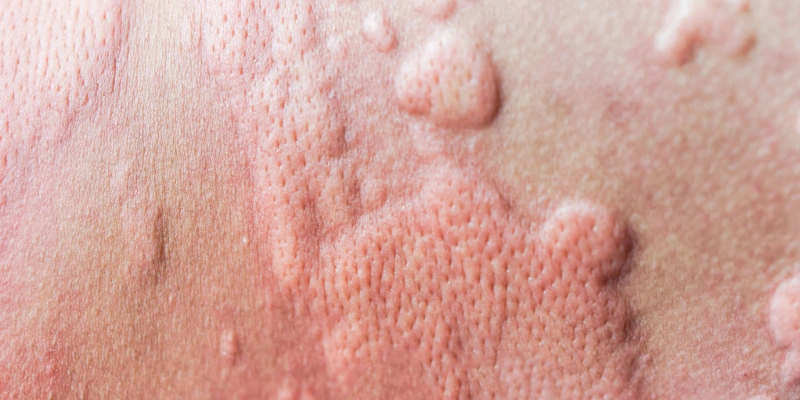
Hives, also known as urticaria, are raised, itchy welts on the skin that often appear suddenly. They can be triggered by allergic reactions, infections, or other factors.
Quick Facts
- Hives can appear and disappear quickly
- Often caused by allergic or immune responses
- Can vary in size and location
- May last hours to days, or longer in chronic cases
- Most cases are not serious but can be uncomfortable
Symptoms
Common symptoms of hives include:
- Raised, red or skin-colored welts
- Itching or burning sensation
- Welts that change shape or move around the body
Causes
Hives occur when histamine and other chemicals are released in the skin.
Common triggers include:
- Mild or severe allergic reactions (foods, medications)
- Infections or illness
- Stress or temperature changes
- Sunlight
- Pressure on the skin
Risk Factors
You may be at higher risk if you:
- Have allergies or asthma
- Have a history of hives
- Experience frequent infections
- Are exposed to known triggers
Treatments
Treatment focuses on relieving symptoms and avoiding triggers.
Common treatment options include:
- Antihistamines to reduce itching and swelling
- Avoiding known triggers
- Short-term medications for more severe symptoms
More advanced treatments may be considered for chronic or severe cases.
When to Seek Care
See a healthcare provider if hives are severe, persistent, or frequently recurring. Seek immediate care if hives occur with swelling of the face or throat, difficulty breathing, or signs of an allergic reaction.
Medical Disclaimer: This content is for general educational purposes only and does not replace professional medical advice, diagnosis, or treatment. Always consult a qualified healthcare provider about your symptoms or health concerns. If you are experiencing a medical emergency, call 911 or seek immediate care