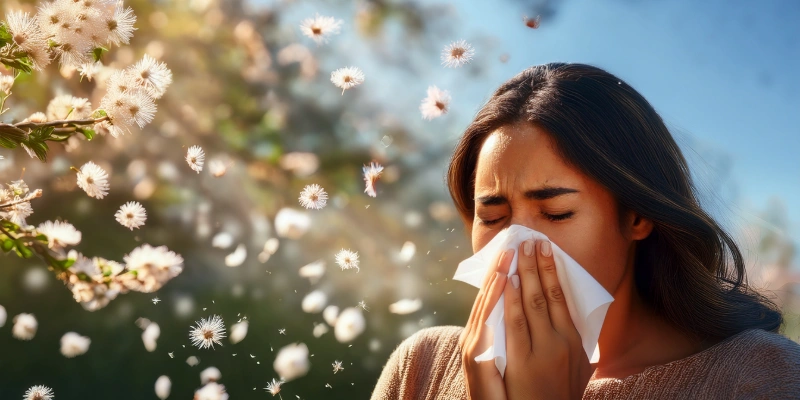
Seasonal Allergies
Seasonal allergies, also known as allergic rhinitis, occur when the immune system overreacts to airborne allergens such as pollen, causing recurring allergy symptoms during certain times of the year.
Quick Facts
- Also called hay fever
- Most commonly triggered by tree, grass, or weed pollen
- Symptoms often occur in spring, summer, or fall
- Seasonal allergies are not contagious
- Symptoms can range from mild to severe
- Effective treatments and preventive strategies are available
Symptoms
Common symptoms of seasonal allergies include:
- Sneezing
- Runny or stuffy nose
- Itchy nose, eyes, or throat
- Watery or red eyes
- Postnasal drip
- Cough
- Fatigue due to poor sleep
- Skin rashes and hives
Causes
Seasonal allergies occur when the immune system identifies harmless airborne substances as threats and releases chemicals such as histamine.
Common triggers include:
- Tree pollen in spring
- Grass pollen in late spring and summer
- Weed pollen in late summer and fall
- Outdoor mold spores
Risk Factors
You may be at higher risk for seasonal allergies if you:
- Have a family history of allergies or asthma
- Have asthma or eczema
- Live in areas with high pollen counts
- Spend significant time outdoors during allergy seasons
Treatments
Treatment focuses on symptom relief and allergen avoidance and may include:
- Antihistamines
- Nasal corticosteroid sprays
- Decongestants
- Allergy eye drops
- Immunotherapy (allergy shots or tablets) for long-term control
- Lifestyle strategies to limit pollen exposure
When to Seek Care
See a doctor if allergy symptoms are severe, persistent, interfere with sleep or daily activities, or do not improve with over-the-counter treatments.
Medical Disclaimer: This content is for general educational purposes only and does not replace professional medical advice, diagnosis, or treatment. Always consult a qualified healthcare provider about your symptoms or health concerns. If you are experiencing a medical emergency, call 911 or seek immediate care