Ear Infection Symptoms in Kids: When to See a Doctor
Ear infections are one of the most common childhood illnesses, especially among babies, toddlers, and young children. They often develop during or shortly after a cold, flu, or upper respiratory infection and can cause significant discomfort.
While some ear infections improve on their own, others require medical treatment. Knowing the symptoms can help parents decide when it's time to seek care.
What Causes Ear Infections in Children?
Most ear infections occur when fluid becomes trapped behind the eardrum. This often happens after a cold or respiratory infection causes swelling in the Eustachian tubes, which connect the middle ear to the back of the throat.
Because children's Eustachian tubes are smaller and more horizontal than those of adults, fluid can build up more easily, creating an environment where infections can develop.
Common Ear Infection Symptoms in Kids
Symptoms can vary depending on your child's age and the severity of the infection.
Common signs of an ear infection include:
- Ear pain or pressure
- Pulling or tugging at the ear
- Fussiness or irritability
- Difficulty sleeping
- Fever
- Trouble hearing or responding to sounds
- Loss of balance
- Headache
- Fluid draining from the ear
- Decreased appetite
Infants and toddlers may not be able to tell you their ear hurts. Instead, they may become unusually fussy, cry more than normal, or have trouble sleeping.
When Should You See a Doctor?
Many parents wonder whether ear pain can simply be monitored at home or if a medical evaluation is needed.
You should contact your child's healthcare provider if:
- Ear pain lasts longer than 24 to 48 hours
- Symptoms appear severe
- Your child develops a fever
- Fluid, pus, or blood drains from the ear
- Your child is younger than 6 months old
- Symptoms improve and then return
- Your child seems unusually tired or irritable
- Hearing appears affected
- Balance problems develop
Prompt evaluation can help determine whether treatment is needed and reduce the risk of complications.
How Are Ear Infections Diagnosed?
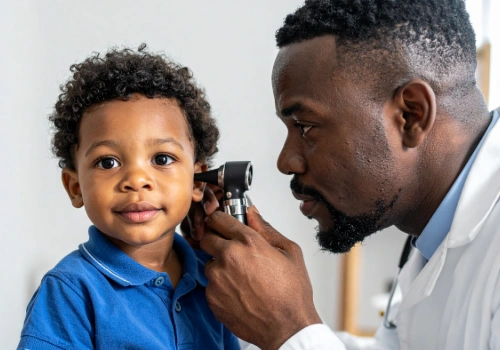
A pediatrician or primary care provider can diagnose an ear infection by examining the ear with an otoscope.
During the exam, they look for:
- Redness of the eardrum
- Swelling
- Fluid behind the eardrum
- Pressure buildup
- Signs of infection
Most children do not require additional testing.
How Are Ear Infections Treated?
Treatment depends on your child's age, symptoms, and the severity of the infection.
Your healthcare provider may recommend:
- Monitoring mild infections
- Acetaminophen or ibuprofen for pain relief
- Antibiotics when appropriate
- Follow-up visits to ensure the infection has resolved
Not every ear infection requires antibiotics. Many mild infections improve on their own, while others may benefit from medication.
If antibiotics are prescribed, be sure your child completes the full course of treatment.
Can Ear Infections Be Prevented?
Although ear infections are common, a few healthy habits may help reduce the risk:
- Encourage frequent handwashing
- Stay current on recommended vaccinations
- Avoid exposure to tobacco smoke
- Manage seasonal allergies when appropriate
- Breastfeed during infancy when possible
- Limit exposure to respiratory illnesses when feasible
These steps may help decrease the frequency of infections and support overall ear health.
Don't Ignore Persistent Ear Pain
Most childhood ear infections improve with proper care, but ongoing symptoms should not be ignored. Early evaluation can help relieve discomfort, prevent complications, and get your child back to feeling their best.
Concerned Your Child May Have an Ear Infection?
Ear pain, fever, fussiness, and trouble sleeping can all be signs of an ear infection. The pediatricians and primary care providers at BASS Medical Group can evaluate your child's symptoms and recommend the most appropriate treatment.
Schedule an appointment with a BASS Medical Group provider today for expert pediatric care and ear infection treatment.

.webp)
.webp)