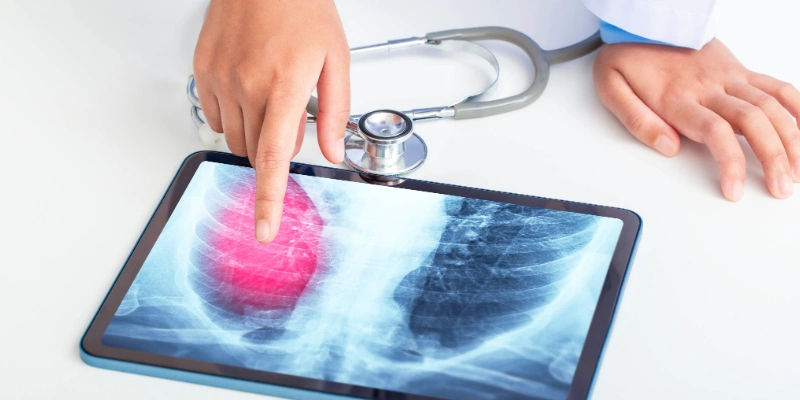
Tuberculosis (TB)
Tuberculosis (TB) is a bacterial infection caused by Mycobacterium tuberculosis that most often affects the lungs. It spreads through the air when an infected person coughs, speaks, or sneezes. TB can be active, causing symptoms and spreading to others, or latent, meaning the bacteria are present in the body but inactive and not contagious.
Quick Facts
- Caused by Mycobacterium tuberculosis bacteria
- Spreads through airborne droplets, not surfaces
- Can be active or latent
- Most commonly affects the lungs but can involve other organs
- Treatable with antibiotics, though treatment may take several months
Symptoms
Symptoms of active TB may include:
- Persistent cough (lasting 3 weeks or longer)
- Chest pain
- Coughing up blood or mucus
Other symptoms may include fever, night sweats, fatigue, and unintentional weight loss. TB can sometimes be mistaken for pneumonia, bronchitis, or other respiratory infections.
Causes
TB is caused by inhaling airborne bacteria released when a person with active TB disease coughs, sneezes, or talks.
Unlike many infections, TB is not spread through casual contact like sharing food or touching surfaces. It typically requires prolonged close exposure.
Risk Factors
You may be at higher risk if you:
- Have close contact with someone who has active TB
- Have a weakened immune system
- Have chronic conditions such as diabetes or HIV
- Live or work in high-risk settings (healthcare facilities, shelters)
- Have traveled to or lived in areas where TB is more common
While TB is less common in the United States, cases are still reported, including in California, particularly in urban areas and higher-risk populations.
Treatments
TB is treated with a combination of antibiotics taken over several months.
For active TB, multiple medications are required to fully eliminate the bacteria and prevent resistance. It is important to complete the full course of treatment, even if symptoms improve.
Latent TB may also be treated to prevent it from becoming active in the future.
When to Seek Care
Seek medical care if you have a persistent cough, unexplained weight loss, fever, or night sweats, especially if you have risk factors for TB or known exposure. Early evaluation and testing are important to prevent spread and begin treatment.