Minor Burns
Minor burns are injuries that affect the outer layers of the skin and usually involve a relatively small area. They may be caused by contact with hot surfaces, hot liquids, steam, sunlight, or other sources of heat. Many minor burns can heal with basic first aid and home care. However, the seriousness of a burn depends on its depth, size, location, and cause. Burns that are deep, large, or located on sensitive areas of the body may require medical attention even if they initially appear small.
Quick Facts
- Minor burns usually affect the outer layer or upper layers of the skin.
- First-degree, or superficial, burns typically cause redness, tenderness, and mild swelling without significant blistering.
- Some small partial-thickness burns may also be considered minor, depending on their depth and location.
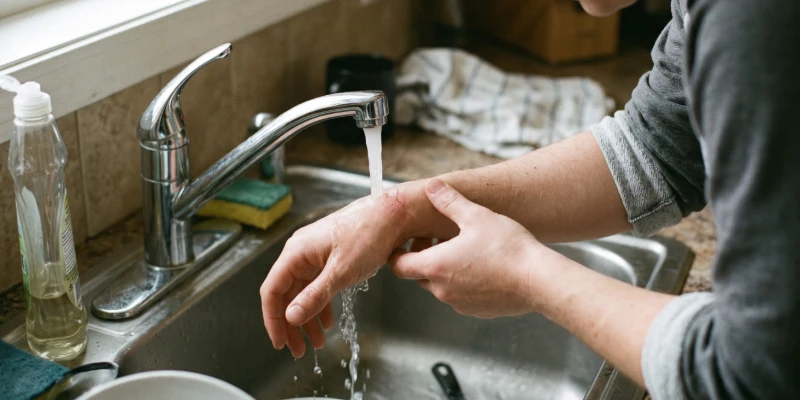
- Cooling a burn under cool running water soon after the injury can help reduce pain and limit additional heat damage.
- Ice should not be applied directly to a burn because it can further damage the skin.
- Blisters should generally be left intact rather than intentionally broken.
- Many minor burns heal within about one to two weeks.
Symptoms
Symptoms of a minor burn may include:
- Red or irritated skin
- Pain, tenderness, or a burning sensation
- Mild swelling
Depending on the depth of the injury, a minor burn may also develop small blisters or increased sensitivity in the affected area.
Causes
Common causes of minor burns include:
- Contact with hot surfaces, such as cookware, appliances, or heated objects
- Hot liquids or steam, sometimes called scald burns
- Sun exposure
- Brief contact with flames or other heat sources
- Friction that damages the surface of the skin
Chemical and electrical burns should be evaluated more cautiously because damage may extend deeper than is immediately visible.
Risk Factors
Minor burns can happen to anyone, but risk may be higher with:
- Cooking or handling hot liquids
- Working around heated equipment or surfaces
- Prolonged sun exposure
- Young age or older age
- Reduced sensation from neuropathy or other medical conditions
- Limited mobility or difficulty moving away from a heat source
Taking precautions around hot surfaces, liquids, and direct sunlight can reduce the risk of many common burns.
Treatments
Many small, superficial burns can be managed with basic first aid.
- Cool the burn with cool running water to help reduce pain and stop continued heat injury. Avoid applying ice directly to the skin.
- Protect the area with a clean, loose dressing after the burn has cooled. Avoid intentionally breaking blisters.
- Manage discomfort and support healing with appropriate over-the-counter pain relief and gentle skin care when needed.
Avoid applying butter, cooking oils, toothpaste, or similar home remedies to a fresh burn because these substances may trap heat or irritate the injured skin.
When to Seek Care
Talk with a healthcare provider, such as your primary care provider or pediatrician, if:
- Pain is severe, worsening, or not improving
- Redness or swelling begins spreading beyond the burned area
- The burn develops drainage or other possible signs of infection
- A blistered burn is not healing as expected
- You are unsure how deep or serious the burn may be
- The person with the burn is very young, older, or has a medical condition that could affect healing
Seek prompt medical attention for burns that:
- Affect the face, hands, feet, genitals, or a major joint
- Cover a large area of the body
- Appear white, brown, black, leathery, or deeply damaged
- Wrap around an arm or leg
- Were caused by electricity or strong chemicals
- Occur with smoke inhalation or breathing problems
These burns may require more specialized evaluation and treatment.