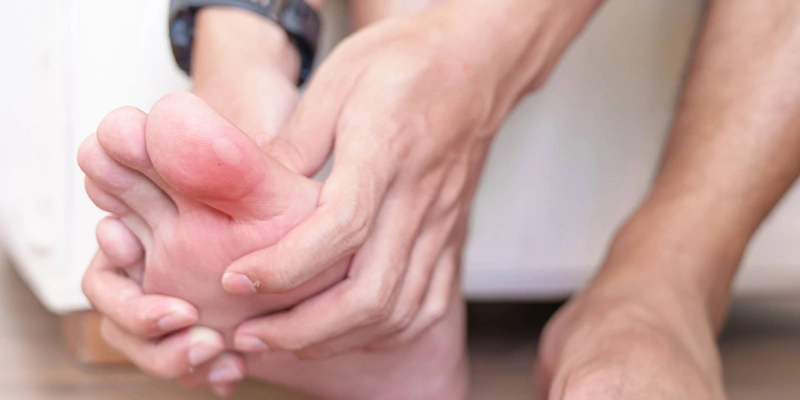
Blisters
Blisters are small pockets of fluid that form on the outer layer of the skin, usually as a result of friction, burns, or irritation. They act as a natural protective barrier, helping the underlying skin heal.
Quick Facts
- Blisters are commonly caused by friction, heat, or skin irritation
- They often occur on the feet and hands
- Most blisters heal on their own within a few days
- Proper care can help prevent infection
- Repeated friction or pressure can lead to recurring blisters
Symptoms
Common symptoms of blisters include:
- Fluid-filled bubble on the skin
- Redness or tenderness around the area
- Pain or discomfort, especially with pressure
Other symptoms may include itching or mild swelling. Blisters can sometimes be confused with other skin conditions such as burns or infections.
Causes
Blisters form when the upper layer of skin is damaged and fluid collects underneath.
Common causes include:
- Friction from shoes, tools, or repetitive motion
- Burns from heat, sunburn, or chemicals
- Skin irritation or allergic reactions
Less commonly, blisters may be associated with infections or underlying conditions, including:
- Bacterial infections such as staph
- Viral infections such as hand, foot, and mouth disease
Risk Factors
You may be at higher risk if you:
- Wear ill-fitting shoes or use new footwear
- Engage in repetitive activities (walking, running, manual work)
- Have sensitive skin
- Are exposed to heat or harsh chemicals
- Have conditions that affect skin integrity
Treatments
Treatment focuses on protecting the blister and preventing infection.
Common treatment options include:
- Covering with a bandage or blister pad
- Keeping the area clean and dry
- Avoiding further friction or pressure
More advanced care may be needed for large, painful, or infected blisters.
Note: Most blisters should not be popped, as the skin helps protect against infection. If a blister is large or painful, it may be carefully drained using clean technique, but leaving it intact when possible is recommended.
When to Seek Care
See a healthcare provider if a blister is large, very painful, shows signs of infection (redness, warmth, pus), or does not improve. You should also seek care if blisters occur frequently or are caused by a burn or underlying condition.