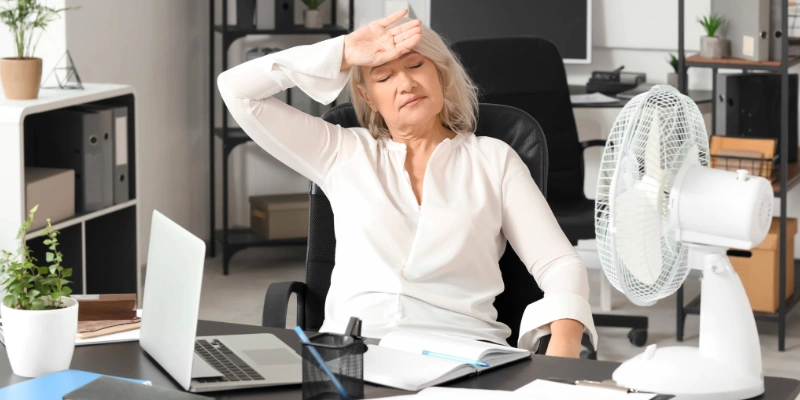
Menopause
Menopause is a natural stage of life that marks the end of menstrual cycles. It is diagnosed after 12 consecutive months without a period and typically occurs between ages 45 and 55. Hormonal changes, especially declining estrogen, can lead to a range of physical and emotional symptoms that vary from person to person.
Quick Facts
- A natural phase marking the end of reproductive years
- Usually occurs between ages 45 and 55
- Caused by declining estrogen levels
- Lower estrogen levels increase the risk of osteoporosis (bone loss)
- Symptoms can begin during perimenopause (years before menopause)
- It is a long-term transition that may require ongoing management
Symptoms
Symptoms often develop gradually as hormone levels, especially estrogen, decline and fluctuate. These hormonal changes can affect multiple systems in the body and may include:
- Hot flashes and night sweats
- Irregular periods (during perimenopause)
- Mood changes or sleep disturbances
Other symptoms may include vaginal dryness, decreased libido, weight changes, or brain fog. Menopause symptoms can sometimes be confused with thyroid disorders or chronic fatigue.
Causes
Menopause occurs as the ovaries naturally produce less estrogen and progesterone over time. This hormonal shift affects multiple systems in the body, including temperature regulation, mood, and bone health.
Risk Factors
You may experience earlier or more intense symptoms if you:
- Have a family history of early menopause
- Smoke
- Have certain medical conditions
- Have had surgery involving the ovaries
Treatments
Treatment focuses on managing symptoms and improving quality of life.
Options may include lifestyle changes, hormone therapy, and non-hormonal medications. Vaginal moisturizers or other therapies may help with specific symptoms.
Care is individualized based on symptoms, medical history, and patient preferences.
When to Seek Care
See a healthcare provider, such as an OBGYN or women's health specialist, if symptoms are severe, affecting sleep or daily life, or if you have concerns about hormone changes or long-term health.