Gout
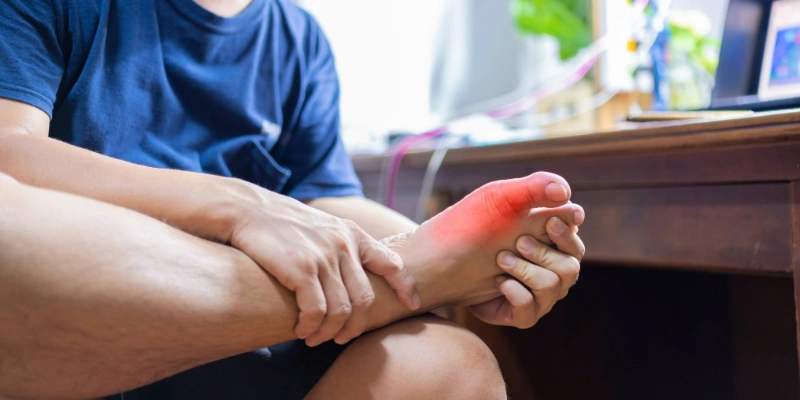
Gout is a form of inflammatory arthritis caused by a buildup of uric acid in the blood. When uric acid levels are high, crystals can form in the joints, leading to sudden and intense pain, swelling, and redness. Gout most commonly affects the big toe but can also involve the ankles, knees, wrists, or fingers.
Quick Facts
- A type of arthritis caused by uric acid crystal buildup
- Often causes sudden, severe joint pain
- Most commonly affects the big toe
- Episodes (flares) can come and go
- Manageable with medication and lifestyle changes
Symptoms
Gout symptoms often begin suddenly, sometimes overnight.
Common symptoms include:
- Intense joint pain, often in the big toe
- Swelling and redness
- Warmth and tenderness in the affected joint
Flares may last for several days and can limit movement. Gout can sometimes be confused with other forms of arthritis, joint infections, or bursitis.
Causes
Gout occurs when uric acid builds up in the blood and forms crystals in the joints.
This can happen due to:
- The body producing too much uric acid
- The kidneys not removing enough uric acid
- Diets high in purines (found in red meat, seafood, and alcohol)
Risk Factors
You may be at higher risk if you:
- Are male or over age 40
- Have a diet high in red meat, certain seafood, or alcohol
- Have obesity
- Have high blood pressure, kidney disease, or diabetes
- Take certain medications (such as diuretics)
Treatments
Treatment focuses on relieving pain during flares and preventing future episodes.
During a flare, medications may be used to reduce inflammation and pain. Long-term treatment may include medications that lower uric acid levels.
Note: Some medications used to treat gout may cause a temporary metallic taste in the mouth. This is usually mild and related to how the body processes the medication
Lifestyle changes, such as adjusting diet, reducing alcohol intake, and maintaining a healthy weight, can help prevent recurrence.
When to Seek Care
Seek medical care if you experience sudden, severe joint pain, especially if it is your first episode. Early treatment can help reduce pain and prevent joint damage.