Herniated Disc
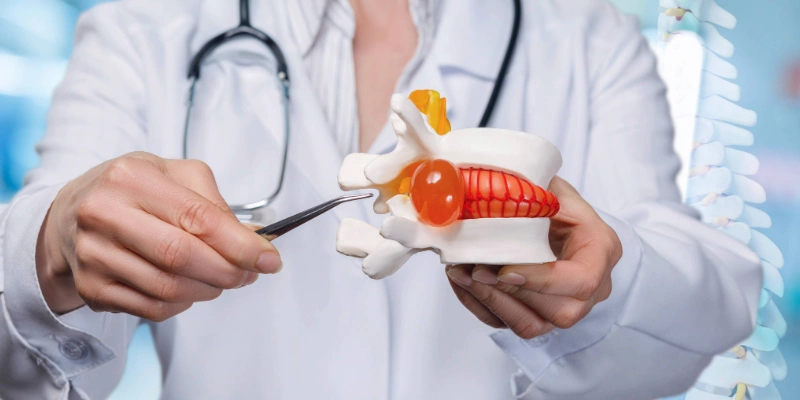
A herniated disc occurs when the soft inner portion of a spinal disc pushes through its outer layer, often pressing on nearby nerves. This can cause pain, numbness, or weakness, typically in the back, neck, arms, or legs.
Quick Facts
- Common cause of back and neck pain
- Occurs when a spinal disc bulges or ruptures
- Can press on nerves and cause radiating pain
- Often improves without surgery
- May be related to aging or injury
Symptoms
Symptoms depend on the location of the affected disc.
Common symptoms include:
- Back or neck pain
- Pain radiating to arms or legs (sciatica)
- Numbness or tingling
Some people may also experience muscle weakness. Herniated discs are often confused with muscle strain or general back pain.
Causes
A herniated disc can result from:
- Age-related wear and tear
- Sudden strain or injury
- Repetitive movements
- Poor posture or lifting technique
Risk Factors
You may be at higher risk if you:
- Are middle-aged or older
- Lift heavy objects improperly
- Have a sedentary lifestyle
- Are overweight
Treatments
Treatment focuses on relieving pressure on the nerves and reducing pain.
Most cases improve with conservative care, including rest, physical therapy, and medications. Physical therapy helps strengthen the spine and improve movement.
In more severe cases, injections or surgery may be considered.
When to Seek Care
Seek care if pain is severe, persistent, or associated with weakness, numbness, or loss of bladder or bowel control.
Evaluation may involve specialists such as physical therapy, orthopedic surgery, pain medicine, or spine surgery, depending on the severity of symptoms and response to initial treatment. Early care can help relieve symptoms and prevent complications.