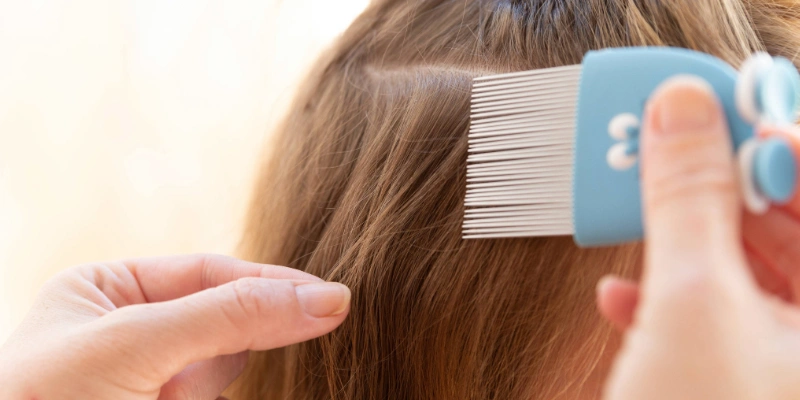
Head Lice
Head lice are tiny parasitic insects that live on the scalp and feed on blood. They are common in children and spread through close head-to-head contact. While they can cause itching and discomfort, head lice are not dangerous and do not spread disease.
Quick Facts
- Most common in school-aged children
- Spread through direct head-to-head contact
- Do not jump or fly
- Not related to hygiene or cleanliness
- Treatable with over-the-counter or prescription products
Symptoms
Common symptoms of head lice include:
- Itching of the scalp
- A tickling or crawling sensation in the hair
- Small red bumps on the scalp, neck, or shoulders
Some people may not notice symptoms right away. Lice or their eggs (nits) may be visible on the hair shaft, often near the scalp. Head lice can sometimes be confused with dandruff or other scalp conditions.
Causes
Head lice spread through direct contact with an infected person.
Common causes include:
- Head-to-head contact during play or activities
- Sharing personal items such as hats, brushes, or hair accessories
- Close contact in school or daycare settings
Lice cannot jump or fly and are spread by crawling.
Risk Factors
You may be at higher risk if you:
- Are a child in school or daycare
- Have close contact with others in group settings
- Share personal items like hats or brushes
- Live in a household where someone has lice
Treatments
Head lice are treated with medicated shampoos, lotions, or creams designed to kill lice.
Most treatments require repeating the application after several days to eliminate newly hatched lice. It is also important to remove nits with a fine-toothed comb.
Cleaning items such as bedding, clothing, and brushes can help prevent reinfestation. Close contacts may also need to be checked and treated if necessary.
When to Seek Care
See a healthcare provider if over-the-counter treatments are not effective, if lice keep returning, or if the scalp becomes irritated or infected from scratching.