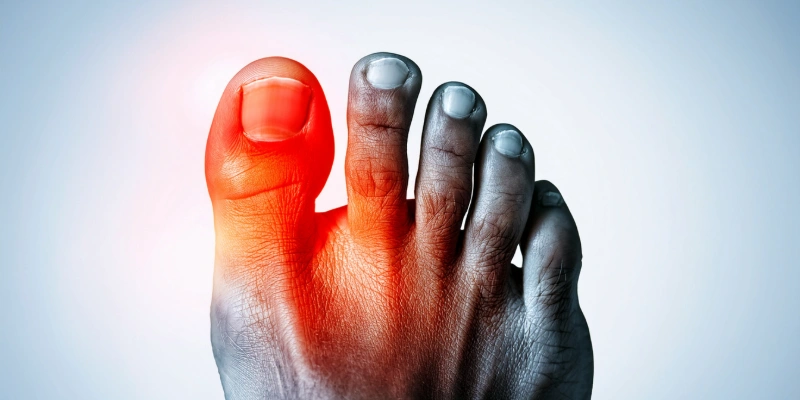
Bunion
A bunion is a bony bump that forms at the base of the big toe. It develops when the joint becomes misaligned, causing the big toe to lean toward the second toe. Bunions can lead to pain, swelling, and difficulty wearing certain shoes. While bunions tend to worsen over time, many people can manage symptoms with conservative care.
Quick Facts
- Bunions are a structural deformity of the foot
- Symptoms may worsen over time without treatment
- Tight or narrow shoes can aggravate symptoms
- More common in women than men
- Early treatment can help reduce discomfort and slow progression
Symptoms
Bunion symptoms can vary but often include:
- A visible bump at the base of the big toe
- Pain or tenderness around the joint
- Swelling and redness
- Difficulty wearing shoes comfortably
- Limited movement of the big toe
- Corns or calluses between the toes
Causes
Bunions develop when pressure on the big toe joint causes it to shift out of alignment.
Common contributing factors include:
- Foot structure or inherited foot shape
- Wearing tight, narrow, or high-heeled shoes
- Arthritis, especially inflammatory types
- Abnormal walking patterns or foot mechanics
Risk Factors
You may be more likely to develop bunions if you:
- Have a family history of bunions
- Wear tight or poorly fitting shoes
- Have flat feet or abnormal foot mechanics
- Have certain types of arthritis
- Spend long periods standing or walking
Treatments
Conservative Care
- Wearing wider, properly fitted shoes
- Using padding or orthotics
- Applying ice to reduce swelling
- Activity modification
Medications
- Anti-inflammatory medications for pain relief
Advanced Treatment
- Custom orthotics to improve foot alignment
- Surgical correction (bunionectomy) in more severe cases
Treatment depends on symptom severity and how much the bunion affects daily life.
When to Seek Care
Medical Disclaimer: This content is for general educational purposes only and does not replace professional medical advice, diagnosis, or treatment. Always consult a qualified healthcare provider about your symptoms or health concerns. If you are experiencing a medical emergency, call 911 or seek immediate care